This service evaluates and enhances AI-based anomaly detection and predictive algorithms, enabling companies to improve operational reliability, reduce unplanned downtime, and optimise decision-making. It supports both industrial companies and AI solution providers in validating their algorithms before deployment in real environments.
The service assesses customer algorithms in representative industrial scenarios, such as production monitoring, equipment condition monitoring, quality control, and demand or process prediction. It analyses performance to identify strengths, limitations, and opportunities for improvement.
Performance evaluation is based on measurable indicators such as detection accuracy, false positive and false negative rates, prediction accuracy, response time, robustness, and impact on operational KPIs (e.g. downtime reduction, maintenance optimisation, process efficiency). This allows companies to quantify the value of their solutions and demonstrate return on investment.
The service includes:
Evaluations can be conducted using ITA’s data analytics environments and testbeds or based on customer-provided data (e.g. sensor data, historical records from ERP/MES systems). Where needed, synthetic datasets or controlled scenarios can be generated to ensure robust validation.
The service follows a structured process:
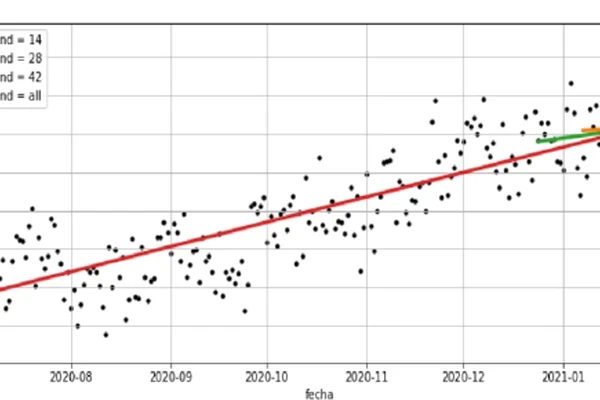
The result is a pilot application materialised as a Power BI template that displays a comparative analysis of the evaluated solutions. This tool enables users to monitor performance indicators, compare algorithm behaviour across scenarios, and support data-driven decision-making.
Typical applications include predictive maintenance in manufacturing equipment, anomaly detection in production lines, quality deviation detection, and forecasting of operational variables. For example, industrial companies can reduce equipment downtime and maintenance costs, while AI solution developers can validate and demonstrate the effectiveness of their algorithms to end users.
To carry out the service, customers are expected to provide access to their algorithms, relevant datasets (e.g. sensor data, operational logs), and system interfaces where applicable. ITA provides expertise in AI, data analytics, and industrial processes, as well as the infrastructure required for evaluation and visualisation.
This service is designed for:
To start a project, companies can contact ITA to define the use case, available data, and evaluation scope. This initial step includes a feasibility assessment and KPI definition, followed by a tailored proposal, execution of the evaluation, and delivery of results through the Power BI application.