How do you automate not only the welding process, but also the handling steps leading up to it? That question was central for BUMET during an AI-MATTERS feasibility study into bin picking. Together with Affix Engineering, the company investigated whether loosely stacked sheet metal parts could be picked up automatically and reliably by a robot. The outcome was clear: the technology has great potential, but at present BUMET requires an intermediate step. That insight in itself delivers significant value.
BUMET: Sheet Metal for a Wide Range of Sectors
BUMET is a supplier of sheet metal components and welded assemblies for customers in sectors including automotive, agriculture, medical and high-tech industries. Around sixty people work at the Heeze site producing brackets, covers, small components and complete assemblies. Managing Director Erik Niewerth explains:
“Robotics has played a role at BUMET for some time. With welding robots, press brake robots and a spot welding robot, we have successfully automated high-volume processes. However, combining this with AI was new for us.”
The Trigger: Automating the Infeed as Well
Interest in AI arose from the Operator of the Future programme. “There is a lot happening in flexible automation,” says Erik. “We wanted to stay closely involved in those developments.”
At the same time, BUMET identified a clear production bottleneck. “We have well-automated processes, but there is almost always still an operator placing products one by one ready for the machine. That can be done differently. We want to automate that step as well.”
Through AI-MATTERS, offered by Brainport Industries, BUMET was given the opportunity to explore this in a safe testing environment. This led to collaboration with Affix Engineering.
From Question to Feasibility Study
Affix Engineering analysed BUMET’s production environment and held in-depth discussions with the team. “Affix speaks our language,” says Erik. “The company has a long history in manufacturing and understands our processes. That makes collaboration very straightforward.”
Together, they clearly defined the challenge. The objective was simple: automatically pick loosely stacked products from a pallet using a robot and present them to a welding station. Affix translated this into a feasibility study for bin picking using vision systems and AI.
Where Does the Difficulty Lie?
In practice, bin picking proves complex. “A robot can easily move from A to B,” Erik explains. “But in our case, pallets arrive with sometimes a thousand components. To pick them automatically, the robot must know exactly where each part is located and in what orientation.”
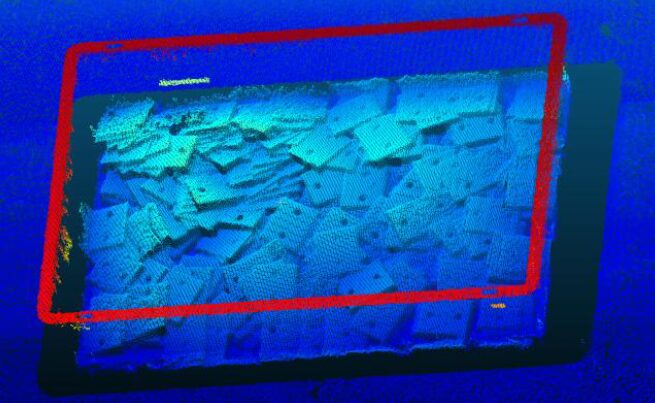
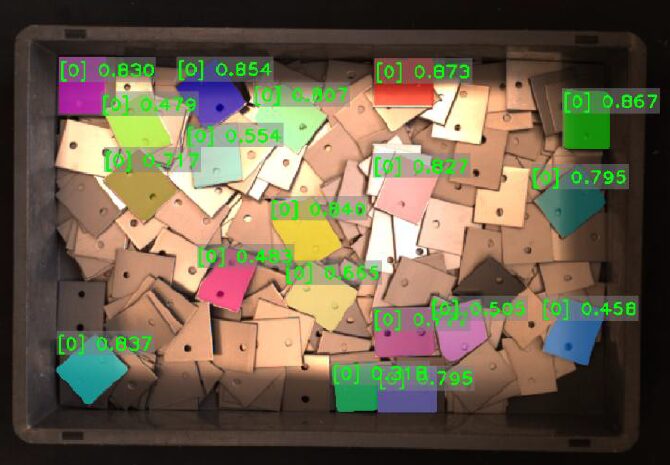
With cameras and AI, shapes can be recognised and success rates calculated. Affix tested various vision configurations and techniques, including 3D CAD matching and deep learning.
3D CAD matching proved feasible, but insufficiently accurate due to the limited distinctive features and the interlocking nature of the parts. Deep learning improved recognition, but did not yet achieve the required 3D accuracy. Alternative vision systems showed similar limitations.
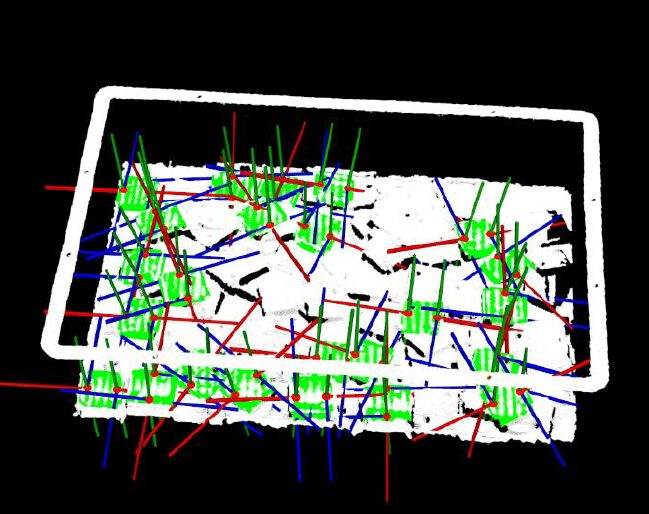
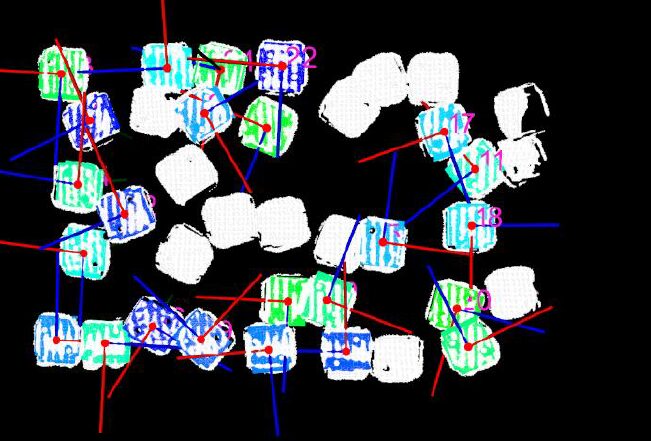
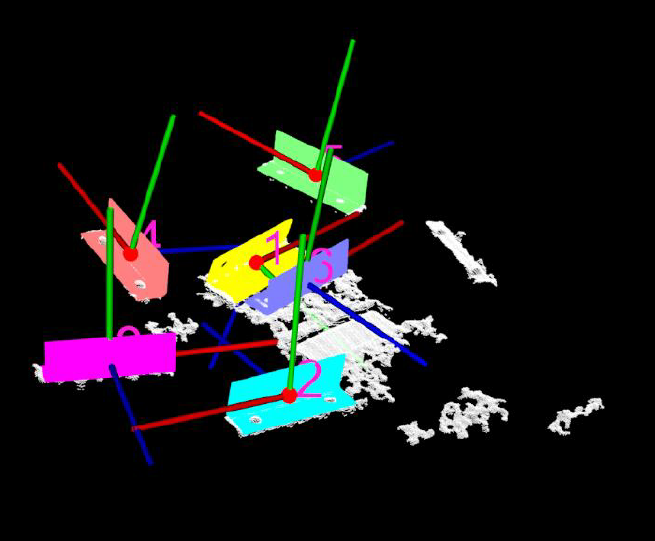
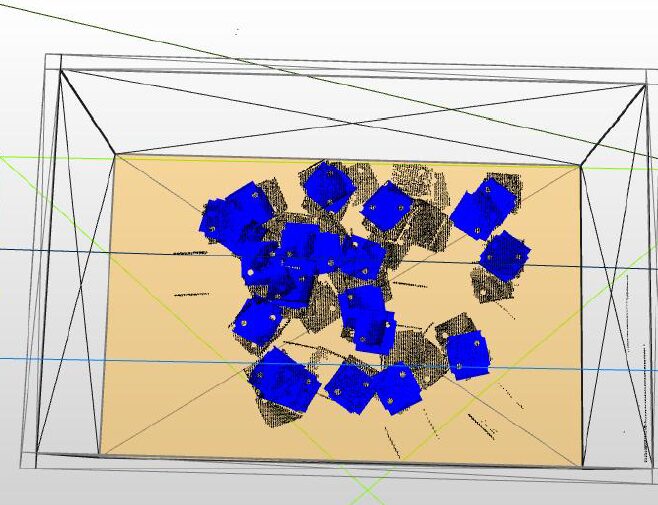
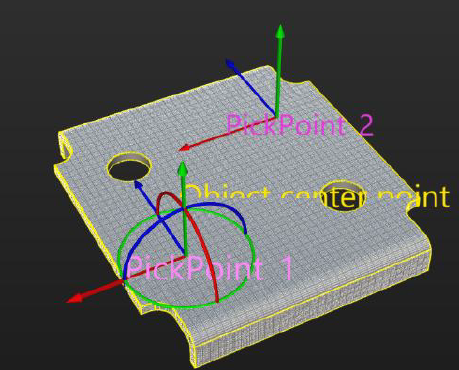
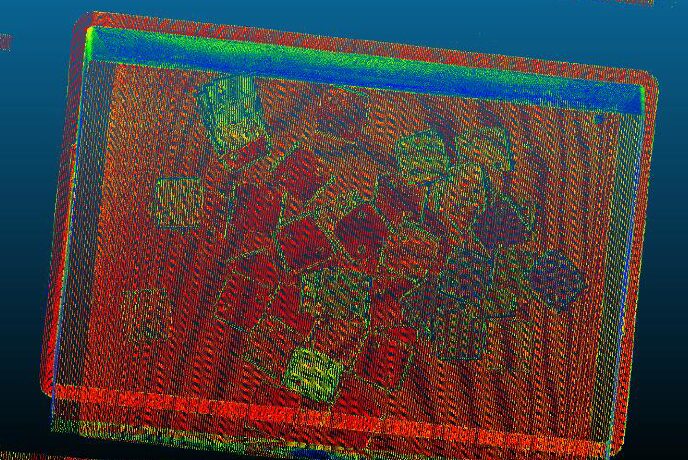
The greatest challenge lies in the geometry of the components: few distinctive features and a high likelihood of entanglement in the bin.
Technical Insights from the Study
The conclusion was honest and clear: for these particular components, the technology is not yet reliable enough for precise and repeatable welding at high volumes.
Nevertheless, for BUMET the outcome is positive, even if the original ambition is not yet achievable. “We now know that the solution as we initially envisioned it does not yet work,” says Erik. “That is valuable knowledge. It prevents us from investing too early.”
At the same time, a realistic path forward has emerged. “An important breakthrough came from considering an intermediate step. With a flex feeder setup, components can first be separated and presented in a fixed orientation. In that configuration, it is possible to feed parts reliably to an industrial robot.”
Collaboration That Builds Confidence
Erik speaks very positively about both the collaboration and AI-MATTERS. “Affix understands the issue with minimal explanation. The team grasps the challenges and is willing to think beyond conventional solutions. They are also honest when something is not yet possible.”
A major advantage of AI-MATTERS, according to Erik, is the safe testing environment. “If you test something like this directly in your factory, you risk production downtime. That is something you want to avoid. In this case, our production continued uninterrupted while the study ran alongside it.”
Looking Ahead with Realistic Expectations
BUMET sees AI as a tool that will become increasingly important. This project primarily provided direction. “We now understand where the technology stands and which steps make sense,” Erik concludes. “That helps us make well-informed decisions for the future.”
His advice to other companies is clear: “I can fully recommend participation in AI-MATTERS. You work with strong partners, you know exactly where you stand, and you truly receive what is promised. It is simply excellent.”
FAQs
Would you like to know how our project managers can help your organisation?
Contact us for a non-binding conversation: https://ai-matters.eu/contact/