Now open · EU consultation Share your views on AI adoption in manufacturing: open until 30 October 2026 Take the questionnaire ›

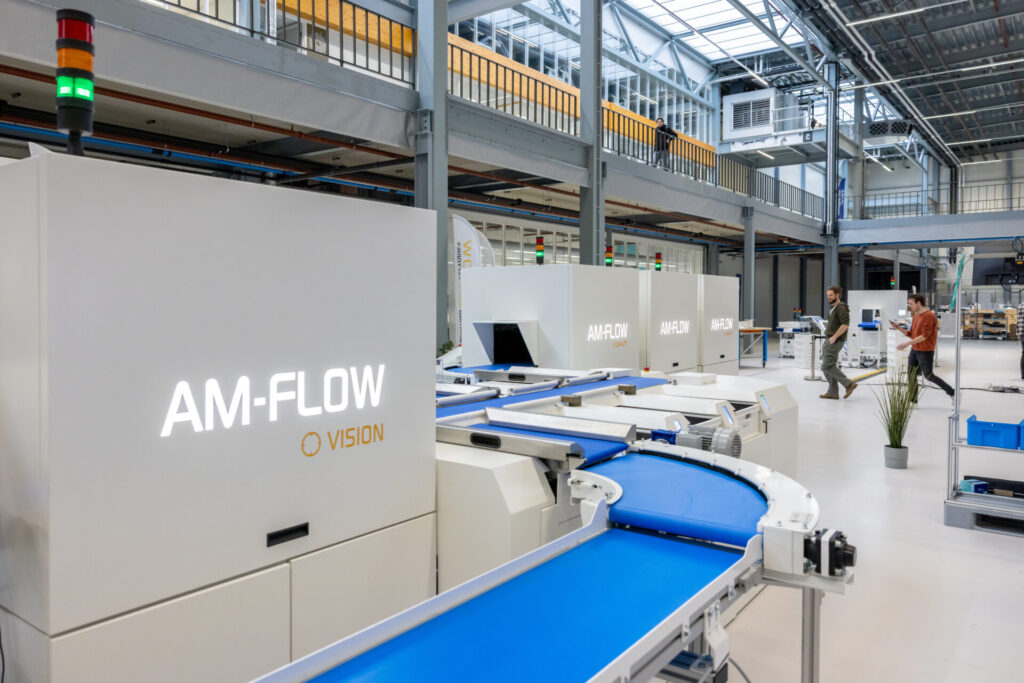
This AI-powered part identification service enables manufacturing companies to automate the identification and tracking of components in production environments with an almost unlimited variety of part geometries, materials, and product variants. It addresses a critical challenge in post-processing automation by improving traceability, reducing manual sorting, and streamlining downstream manufacturing and logistics processes.
The solution combines advanced computer vision, 3D image recognition, and machine learning to identify parts quickly and accurately during or after manufacturing operations. By analyzing geometric features, dimensions, surface characteristics, and color, the system matches physical components to their corresponding digital 3D models, delivering reliable identification even in highly variable High-Mix, Low-Volume (HMLV) production environments.
Through continuous AI model training, the system learns from every processed component, improving recognition accuracy, robustness, and scalability across different product families, materials, and manufacturing conditions.
By integrating AI-driven identification into existing production workflows, manufacturers can increase automation, minimize identification errors, enhance production traceability, and improve operational efficiency throughout the manufacturing process.
Customer Inputs
To perform the test or experiment, the customer is expected to provide:
A use-case description, including the desired level of automation and targeted performance improvements.
Representative parts or products to be identified, including information on geometry, dimensions, materials, and relevant technical specifications.
Deliverables
Each experiment concludes with a comprehensive evaluation report covering:
Identification accuracy for different part geometries, materials, and product variants.
AI model performance, robustness, and learning capabilities.
Suitability for the customer’s manufacturing process and production environment.
Expected impact on automation, traceability, and production efficiency.
User – Manufacturing companies operating in high-mix, low-volume and high-complexity environments that need reliable part identification to automate post-processing