How can I optimise my operational processes using AI without disrupting my business?
Operational processes in manufacturing, logistics, and supply chain management are becoming increasingly complex. Variability in demand, resource constraints, and the need for real-time responsiveness require organisations to move beyond traditional optimisation approaches.
What does this service provide?
At ITA, through AI-MATTERS, we support companies in evaluating, selecting, and deploying advanced AI-based algorithms to optimise operational processes across manufacturing, warehouses, logistics, and demand forecasting. Our approach combines rigorous algorithm assessment with practical validation in real environments, ensuring that solutions are not only technically sound but also operationally effective.
Evaluating and selecting the right algorithm for each challenge
Not all optimisation problems require the same approach. From heuristic methods to machine learning and hybrid AI techniques, choosing the most suitable algorithm is critical. We provide:
- Evaluation of alternative and complementary solutions, identifying the most effective approaches for specific operational challenges
- Benchmarking of advanced algorithms, comparing performance in terms of accuracy, robustness, scalability, and computational efficiency
- Assessment under realistic conditions, ensuring that solutions perform reliably in dynamic and uncertain environments
This enables companies to make informed decisions before committing to implementation, reducing risk and accelerating time-to-value.
Why is this important?
Beyond theoretical performance, understanding how algorithms behave in real scenarios is essential. Our services include:
- Characterisation of algorithm behaviour under different operational conditions
- Validation using real or representative datasets, including demand patterns, production constraints, and logistics flows
- Analysis of trade-offs, such as cost vs. service level, efficiency vs. flexibility, or accuracy vs. computational effort
This provides a clear understanding of how each solution will impact key business metrics.
What are the benefits?
Through this approach, organisations can achieve:
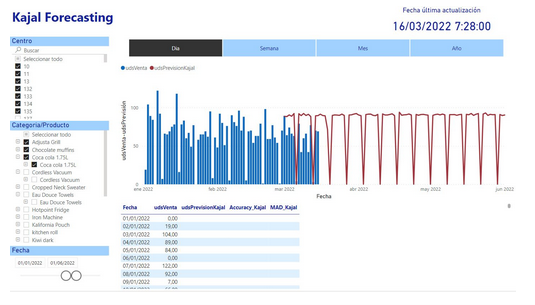
- Improved forecast accuracy and demand planning
- Enhanced resource allocation and production efficiency
- Optimised inventory levels and logistics flows
- Increased resilience and adaptability to changing conditions
Ultimately, AI-driven optimisation transforms operational processes into intelligent systems capable of continuous improvement.
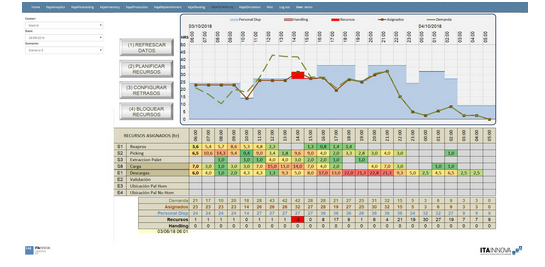
Enabling smarter operations through AI
ITA, through AI-MATTERS, supports companies throughout the entire journey: from identifying the most suitable algorithms to validating their performance and integrating them into real operations.
This ensures that AI is not just explored, but effectively applied to deliver measurable improvements in efficiency, cost, and service levels across the supply chain.
Why AI-MATTERS?
AI-MATTERS provides:
- Access to real production environments
- Data and use cases for experimentation
- Expert support throughout the process
This allows companies to move from idea to validated solution with reduced risk.
Frequently Asked Questions
AI-driven optimisation allows you to improve processes using your existing data, workflows, and systems. By testing different algorithms in realistic conditions, you can:
- Identify inefficiencies in production, logistics, or planning
- Improve resource allocation and forecasting
- Optimise performance without major system changes
This enables practical improvements without disruption and scalable optimisation aligned with current operations.
Different optimisation problems require different approaches (e.g. heuristics, machine learning, hybrid AI). This service helps you:
- Compare multiple algorithms (accuracy, robustness, scalability)
- Understand trade-offs (cost vs. service level, speed vs. precision)
- Select the best-fit solution for your specific use case
This reduces risk and avoids investing in the wrong solution
After evaluation and validation, companies typically achieve:
- Better demand forecasting and planning accuracy
- Improved production efficiency and resource utilisation
- Optimised inventory and logistics flows
- Increased resilience to changing conditions
The key outcome is a validated solution that delivers measurable improvements in real operations, not just theoretical optimisation
Would you like to discover how AI can Benefit your company?
👉 Contact our project managers a non-binding conversation