Now open · EU consultation Share your views on AI adoption in manufacturing: open until 30 October 2026 Take the questionnaire ›

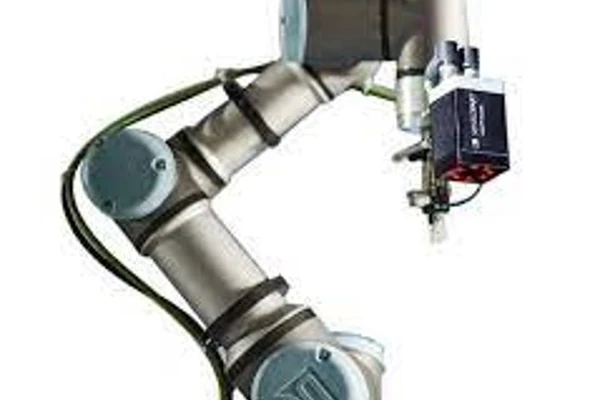
This service evaluates and enhances customer solutions based on artificial vision and perception algorithms for automatic identification in industrial processes. It helps companies improve accuracy, robustness, and efficiency in tasks such as inspection, tracking, and decision-making based on heterogeneous data sources.
The service assesses customer algorithms against different industrial use cases, including manufacturing, quality control, logistics, and asset tracking. It also evaluates algorithms designed for advanced data processing of heterogeneous data sources (e.g. image data combined with sensor, ERP, or operational data), enabling more reliable and context-aware insights.
Performance is analysed in key tasks such as classification, segmentation, object detection, behavioural pattern identification, and prediction. These evaluations consider the integration of multiple data types to improve process understanding and operational decision-making.
The service includes:
Typical applications include automated quality inspection in production lines, identification and tracking of materials in warehouses, and behaviour analysis in complex industrial environments. For example, manufacturers can reduce defect rates through improved visual inspection, while logistics operators can increase traceability and reduce losses through advanced tracking systems.
The service follows a structured approach:
The result is a pilot application that enables the evaluation of different algorithms for a specific use case and demonstrates the potential of advanced technologies. Expected outcomes include improved detection accuracy, reduced processing times, increased automation levels, and enhanced decision-making capabilities.
To carry out the service, customers are expected to provide access to relevant datasets (e.g. image data, sensor data, or operational data), system interfaces, and a defined use case. ITA provides expertise in artificial vision, AI, and data integration, as well as the necessary infrastructure for testing and validation.
This service is designed for:
To start a project, companies can contact ITA to define their use case and assess available data and system requirements. This initial step leads to a tailored proposal, followed by evaluation, pilot development, and validation of results.