Now open · EU consultation Share your views on AI adoption in manufacturing: open until 30 October 2026 Take the questionnaire ›

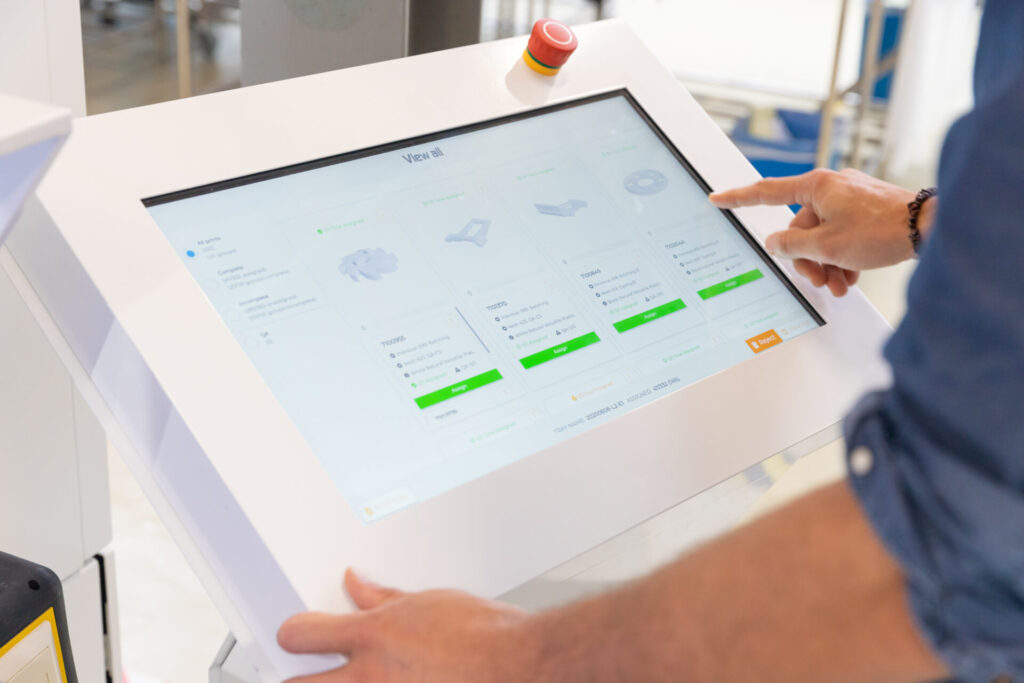
This AI-powered service enables manufacturing SMEs to evaluate intelligent post-processing automation in High-Mix, Low-Volume (HMLV) production environments. It integrates AI, robotics, computer vision, and intelligent material handling into a smart manufacturing workflow to improve productivity, flexibility, and operational performance.
A centralized software platform orchestrates AI-based part identification, automated sorting, robotic handling, and workflow automation, enabling machine-to-machine communication, end-to-end traceability, and real-time production monitoring through intuitive dashboards.
By reducing manual interventions and non-value-added activities, the service optimizes the handling of complex products with highly variable geometries and materials while providing actionable insights for continuous process improvement.
The result is higher production efficiency, improved quality and traceability, lower operational costs, and greater manufacturing flexibility, helping SMEs accelerate their digital transformation.
Customer Inputs
To perform the test or experiment, the customer is expected to provide:
A use-case description, including the desired level of automation and targeted performance improvements.
Representative parts or products to be handled, including information on geometry, dimensions, materials, and relevant technical specifications.
The outcomes of the experiment are documented in a comprehensive evaluation report, providing insights into:
End-to-end workflow efficiency and process optimization potential
Integration performance across identification, sorting, and handling modules
Improvements in traceability, quality control, and operational visibility
Reduction of manual intervention and non-value-added activities
Recommendations for scaling toward a fully automated, data-driven post-processing environment
Evaluation of ability to leverage existing technology for high variability of parts
Demonstration Exploration with clients Testing with clients parts Experimentation (with adjustments to current set-up) based on clients new and highly potential use cases
User – Manufacturing companies operating in high-mix, low-volume and high-complexity environments that need reliable part post-processing automation for high-variation manufacturing