Now open · EU consultation Share your views on AI adoption in manufacturing: open until 30 October 2026 Take the questionnaire ›

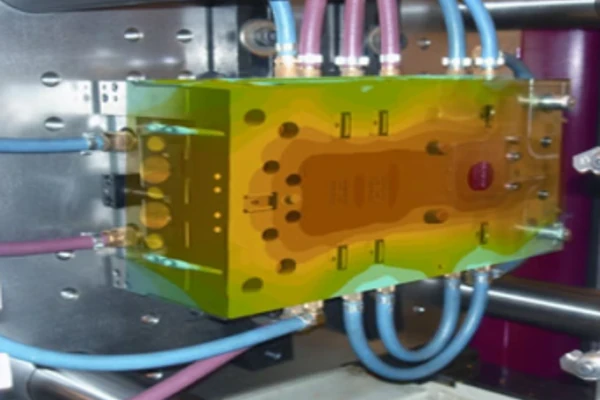
This service develops physically based digital twins of manufacturing processes and their surrounding environments to support process optimisation, performance analysis, and the effective integration of AI technologies. It enables companies to better understand their processes, reduce experimentation costs, and accelerate the deployment of data-driven solutions.
Digital twin models provide:
The models are built using reduced order models (ROMs) derived from physics-based simulations (PBS) of the processes. These ROMs enable real-time simulation while preserving the accuracy of high-fidelity models. Machine learning techniques are applied to accelerate model computation and enhance predictive capabilities.
The service includes:
The result is a pilot application delivered as a software tool (engineering application or script) based on the ROM of the process. This tool acts as a virtual manufacturing environment that allows users to simulate scenarios, test process configurations, and generate synthetic data for further AI-based developments.
Additionally, the digital twins are used to analyse process performance and evaluate improvement strategies. The service includes the proposal and initial validation of alternative, complementary, or enhanced solutions to maximise process capabilities and performance in specific industrial use cases.
The service follows a structured approach:
Typical applications include optimisation of injection moulding cycles, reduction of defects in forming processes, improvement of additive manufacturing quality, and simulation of chemical reactor performance. For example, companies can reduce material waste, improve product quality, or decrease cycle times through virtual testing before physical implementation.
Expected outcomes include measurable improvements such as reduced development time, lower experimental costs, improved process stability, and increased production efficiency.
To carry out the service, customers are expected to provide access to process data, machine parameters, material specifications, and, where possible, validation data from real operations. ITA provides expertise in modelling, simulation, and AI, as well as the computational infrastructure required to develop and validate digital twins.
This service is designed for:
To start a project, companies can contact ITA to define the target process and available data. This initial step includes a feasibility assessment, followed by a tailored proposal, model development, validation, and delivery of the pilot application.